
A collective pandemic traumaversary
Can you feel it?
We are hovering.
Near the one year mark of this pandemic.
Do you remember the eeriness of last year?
I remember it felt like if I looked up, it would be grey skies and crows circling.
Can you feel it?
We are hovering.
Near the one year mark of this pandemic.
Do you remember the eeriness of last year?
I remember it felt like if I looked up, it would be grey skies and crows circling.
(Which, coincidentally, is a great visual for the inside of my mind this year, more or less.)
If you take a moment, and if you want to - can you remember anything you were feeling when news of Covid-19 arrived? Any thoughts, sensations, or feelings?
The tinny, not-quite-real feeling? That time stretched molasses & saltwater taffy endless?
The alarm bells going off, maybe at first quietly, and then with shrill abandon?
The nights we scrolled through case numbers and couldn’t sleep?
The days we distracted ourselves through, shutting our eyes to what was happening?
The ways we adapted to how quickly things changed (and in some cases, should have and yet, didn’t).
How the timeline kept morphing like a kaleidoscope zoomed up into a fun house, teetering wildly on a carousel.
And that was just the beginning. Since then, we have all been finding our way through it.
I won’t lie to you and say we’re all in it together. We might not be. People are having their own experiences in their own proximity (or lack thereof) to privilege.
But I will say - we are all finding our way.
And the thing about surviving something is, sometimes in the process of getting through it, we can’t feel it completely.
We’re busy surviving. It makes sense.
Our energy has been sent other places. Like a plant with some branches and leaves pruned.
Our baseline has changed.
We have been drawing water up from a thirsty well.
We ration texts and phone calls because we just can’t even. Even and especially when we want to connect.
We are getting through it. Which is a full time job. Which means there isn’t always time to process it.
But right now, this time we are in - one year into the pandemic - there could be more coming up for you, perhaps all of a sudden. This pocket of time, the second ring around a growing tree of the-world-changing, could be called a collective traumaversary. The anniversary of something traumatic.
It’s not uncommon for this time to be potent and sharp, or dull and achy. We might return to coping we needed last year - endless scrolling and not enough sleep, or “too much” sleep and the familiar comfort or grief of isolation. Our bodies might have a lot to say. We might feel disoriented or overwhelmed or wilted with compassion fatigue for all we have had to cradle gently for a whole year (and maybe longer) with weary arms and not a lot of places to put it. We might, and apologies that this is Not At All Poetic - be depressed.
Whatever you are noticing, whatever you are experiencing, it is so valid.
If it feels right to you, here is some space to check in. A few gentle prompts.
What am I noticing right now? You might take a moment to connect with your body and mind, or free write a list.
What do these experiences feel connected to? Is there anything that’s coming up for you that feels connected to this collective anniversary we are in right now?
What might I need? You might need space, understanding, support, validation, extra gentleness or rest. You deserve what you need.
This time can be tough. I think it’s allowed to be. We’re not doing it wrong if we’re struggling.
I hope this space to check in felt helpful. We might not all be in it together, but maybe we’re also not alone in it.
If you’d like more support getting through a traumaversary, I made a guide for you. I created Tending to Traumaversaries because I know having a deeper understanding of traumatic anniversaries and all that can arise in us can feel affirming. Because sometimes, creating a care plan can soothe our worried mind. And because, we might not have access to the fullness of support we need, but a guide that can live on your digital shelf might feel approachable and accessible. Maybe it’s not really enough, because what is Enough in the world we live in, really?- but maybe it will be Something. And what if all of these little Somethings add up, like a weaving of support that can hold us as we get through?
Sending you wishes for gentleness, and honoring however you are getting through,
♥ Jess

It is brave to stay in my body, it is wise sometimes to leave it
If you are someone who struggles to stay in your body.
If you are someone who has leaned into dissociation as a survival strategy.
If you are someone who struggles to connect with the sensations and language of your body.
If you are someone who encounters deep pain when you touch into your bodyscape so it’s like: okay, why the heck would I even go there?
If you are someone who has been should on to stay with your body as if it’s easy.
If you are someone who has been admonished and shamed for shutting down, numbing out or disconnecting from parts of your body.
This love note is for you.
If you are someone who struggles to stay in your body.
If you are someone who has leaned into dissociation as a survival strategy.
If you are someone who struggles to connect with the sensations and language of your body.
If you are someone who encounters deep pain when you touch into your bodyscape so it’s like: okay, why the heck would I even go there?
If you are someone who has been should on to stay with your body as if it’s easy.
If you are someone who has been admonished and shamed for shutting down, numbing out or disconnecting from parts of your body.
This love note is for you.
There is wisdom in living in our body. In embodying the skin and bones, the muscle and cells - the nervous system that works towards equilibrium and survival in any way possible.
There is wisdom in leaving our body. In disconnection, in dissociation, in numbness and avoidance and not being ready to go there.
If you are someone who has experienced or experiences chronic pain, chronic illness, or traumatic experiences, the body might not always feel like a safe place to be. It might not feel like a thing we can trust. It might be a place that betrayal has happened, or is happening. We might feel or have felt this from the hands of someone/thing else, or in the disappointment we may feel about our own body and its processes and how they impact us and our lives.
I want to say that this (this being whatever you feel, whether I have named it or not) is so fucking valid.
It makes sense if connecting with our bodies is hard. It can be wise to move slowly. It can be helpful to work with someone who gets that bodybased approaches might be super challenging and that it’s not a one-and-done deal. It can be affirming for someone to say:
Look at you. Look at the ways you have survived.
Look at the ways you are surviving.
And before we try to change a thing —
Let’s start with honoring the hell out of that.
Shall we?
[ ] Yes
[ ] No
Jess
P.S. I am over the moon to be sharing so much about bodies, embodiment, pain, the nervous system and trauma with y’all! Like, really and truly. ❀ Tending to Chronic Pain, a 4 week journey for meeting our pain & our selves with growing compassion is opening soon. Click here to join the waitlist!

Gratitude is not required on your chronic pain journey
Gratitude is not required in your journey with chronic pain.
Sure, folks will foist it upon you.
Tell you your pain is a gift.
And it might be.
But the truth, as with most things, is that you get to decide.
And often it’s not as simple as a gift with no sharp edges.
Perhaps it’s easier for someone else to declare your experience a gift when it isn’t theirs to hold.
Gratitude is not required in your journey with chronic pain.
Sure, folks will foist it upon you.
Tell you your pain is a gift.
And it might be.
But the truth, as with most things, is that you get to decide.
And often it’s not as simple as a gift with no sharp edges.
Perhaps it’s easier for someone else to declare your experience a gift when it isn’t theirs to hold.
Your gratitude is welcome. Same as everything other feeling (and there can be so many).
But it’s not required, even if you’re repeatedly told otherwise.
There can be glimmers of gifts and beams of gratitude and even the occasional appreciation for a lesson, but folks often paste these bright spots over the intensity and immensity of the pain you might experience.
Today, I’m here to say that wherever you are in your experience is okay.
You need not fastforward or find the silver lining in the storm cloud that threatens a flare.
Sometimes we just sit on our front porch as the clouds hang low, limbs restless and heart thudding deep, and whatever we feel is not a thing to usher in or push away, it’s just a thing that’s there and true because our bones sing of it. Maybe it’s a cloud, and it might float on or stick around. We might not know yet. And whatever we see in it or make of it is ours, a thing that can’t be lassoed by someone else’s hollow words because they’re not the ones on the porch in the weather, eyes toward the storm.
Sending care though the clouds,
Jess

Dear Coaches: Mindset Isn't Everything
I am beyond tired of healing and coaching models boiling complex circumstances down to mindset work & emotional/mental/healing blocks. There is no way this is the full picture. However, this is a great business model if you want someone to believe they are the problem and they can only change themselves and their circumstances via your program or services.
I am beyond tired of healing and coaching models boiling complex circumstances down to mindset work & emotional/mental/healing blocks. There is no way this is the full picture. However, this is a great business model if you want someone to believe they are the problem and they can only change themselves and their circumstances via your program or services.
If a client feels aligned with and inspired by mindset work, breaking through blocks, and doing inner work - yahoo, go for it!
But I’m not talking about that.
I’m talking about mindset work that doesn’t acknowledge systemic oppression, pull-yourself-up-by-your-bootstraps, try harder, get out of your own way, don’t be a victim of your circumstance language and approaches.
I’m talking about reducing a complex, holistic, messy situation into a wholly personal problem.
I’m talking about a client bringing a coach (business, healing, life, whatever!) a criticism (of the coach, a methodology, life, whatever!) & the critique being turned right back around onto the client as a block they need to clear/work through/whatever!
I’m talking about where we are pointing our fucking fingers, and can we please be more thoughtful and careful & intentional about it?
This narrow approach of “you are the problem/I am the problem” can feel empowering, sometimes! We often turn to this when we feel out of control in a situation we need to survive. If I am the problem, then maybe I can solve the problem, and things will get better. Seems easier than changing all these shitty external out-of-our-hands things.
When we look at our selves, we are powerful - yes. When we look at our world and the systems we live in, they are powerful too.
I will not rally behind coaches distilling complex issues into client’s personal problems. It is gross, it is negligent, it is misinformed, and it is harmful.
So what can we do as folks in healing and helping spaces?
Can we follow our clients’ lead on the approaches that best serve them?
Can we strive to be anti-oppressive & learn about systemic injustice?
Can we stop teaching & preaching mindset as a way of bypassing tough realities & collective states?
Can we? Please?
Love/I’ve had it,
Jess
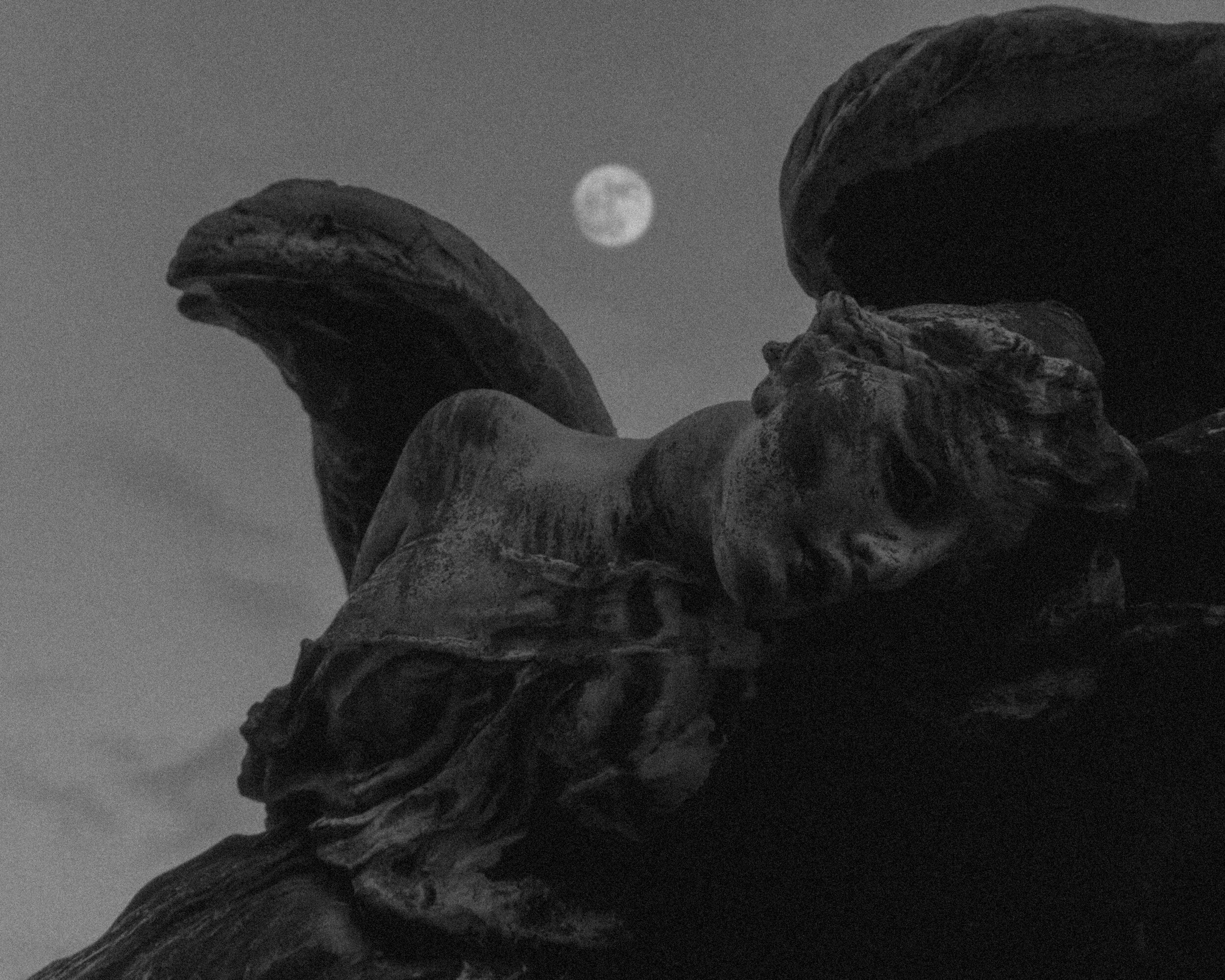
Sometimes the things that happened to us are unspeakable but often our body knows the words
Sometimes the things that happened to us are unspeakable but often our body knows the words, holds the experience, makes muscle memory of the truth. Somatic knowing and memories are valid, even without the traditional narrative that so many expect.
In a world that doesn’t make space for survivors’ stories and truth, the body can be testament. The body can be holy ground of hot knowing and surefire knowledge.
Sometimes the things that happened to us are unspeakable but often our body knows the words, holds the experience, makes muscle memory of the truth. Somatic knowing and memories are valid, even without the traditional narrative that so many expect.
In a world that doesn’t make space for survivors’ stories and truth, the body can be testament. The body can be holy ground of hot knowing and surefire knowledge.
And as humans with brains in a society that gaslights, dismisses, minimizes and pathologizes, even the brilliance of our body might come into question from our brain from time to time.
Perhaps our body has a knowing that doesn’t pour itself into 26 letters and words. Perhaps our body speaks to us through symptoms, symbols and dreams, whatever it takes to unleash the truth and dare (or hope) to be heard. However your body expresses its held experiences, this truth, your truth, is believed and held here. So are you.

Bodybased practices can be challenging for survivors
If you are on a journey of healing from traumatic experiences, it’s possible you are often coached, advised and encouraged to get in touch with your body, connect with your senses, and get embodied.
And while the practice of connecting with our bodies can absolutely be helpful for survivors, it can also feel daunting. Unsafe. Overwhelming.
I want to connect with you about this journey of reconnecting with our bodies, and why it might feel difficult. I hope these words feel supportive and helpful.
If you are on a journey of healing from traumatic experiences, it’s possible you are often coached, advised and encouraged to get in touch with your body, connect with your senses, and get embodied.
And while the practice of connecting with our bodies can absolutely be helpful for survivors, it can also feel daunting. Unsafe. Overwhelming.
I want to connect with you about this journey of reconnecting with our bodies, and why it might feel difficult. I hope these words feel supportive and helpful. I hope it comes through that I hold close to my chest the knowing that everyone is on their own journey, that this isn’t a good/bad binary, and that what feels scary at one point can potentially shift. I hope upon reading these words you are reminded that you’re not alone in this struggle, and that this particular challenge might not be a forever challenge.
When you’re ready, let’s gently begin.
Embodiment practices might feel scary or overwhelming if our body has been harmed, violated, and traumatized. Bodybased practices might not feel safe for us, and a lot can come up. Our nervous system might mobilize, and we might experience collapse/dissociation, or activation/flight/fight, just to name a few of the possibilities.
If this has been your experience, there is likely wisdom in these nervous system responses. It doesn’t mean anything is wrong with you; it might mean you need more or different supports. It might mean your nervous system needs loving attention while you engage in this body based practice. It might mean a different practice or practitioner would be more supportive to you and your process.
Part of what can be challenging is that when folks are offering bodybased practices and they aren’t trauma-informed, we might not get the support and adaptations we need. They might not have an understanding of the nervous system that they can share with us and use to support us through what comes up. They might not have trauma sensitive practices in place. And when this is lacking, and we feel retraumatized through the practices, we might blame ourselves or feel shame.
And then, maybe we avoid bodybased practices because they don’t feel safe for us. Even if part of us feels or thinks: I know this could be healing for me. I did this for a long time, way back in my healing. I could not be in a closed door in a yoga class with a group of folks and a teacher I didn’t know. I just couldn’t. I felt closed off, but I was also deeply rooted to my own wisdom. Something in me was saying: not this. Not yet.
Sometimes what feels like the edgiest lifelong forever “no” is really a “not yet” or “not like this” or “not with you”. And maybe that’s okay.
At the same time, I was working with a somatic practitioner in a relationship I trusted. Doing bodybased work in a setting where all of me could be attended to. And building up not only safety and safe experiences with this somatic work, but capacity for it, too.
I could write for a long time about the journey of survivors and trauma-informed body based practices. I wholly believe they can be so important for the healing journey. AND. I don’t believe survivors should be rushed, shoulded on or shamed. I trust survivors. When they say: bodybased work or this certain bodybased practice doesn’t feel safe for me, I believe that. It is their body, after all.
This wisdom is to be trusted. Consent is of utmost importance. Autonomy is to be nurtured. We must not try to weasel someone’s no into a yes, just because we think such-and-such thing would be good for them. For the love of Pete! ..Whoever Pete is. I have always wondered.
And in my other hand, I want to extend a small thread of hope to anyone reading who feels like bodybased practices are inaccessible. Some of them are. Right now, many might be inaccessible for you. I get that and trust that. And. Maybe there is just the tiniest possibility of building a bridge into your body, embodiment, and somatics. The steps can be small. The bridge’s material can be made of whatever you need it to be. The path might be windy, full of fits and starts.
You might not feel like you are doing much, with one foot teetering on the edge of the bridge. But even imagining the possibility of connecting with your body, for someone who has survived immense harm, is brave and huge. I see you in that. Perhaps, for right now, if this is where you are, just considering. It might not feel like enough, but with so much compassion and warmth I want to remind you that what is small can be like a stone in water, with ripples shimmering endless.
Sending you support wherever you are in this journey.
From my pond to yours,
Jess